Dance movement psychotherapy: what it is
Where dance movement psychotherapy came from, what happens in a session, how it is trained and registered in the UK, and how it differs from a dance class or a movement workshop.
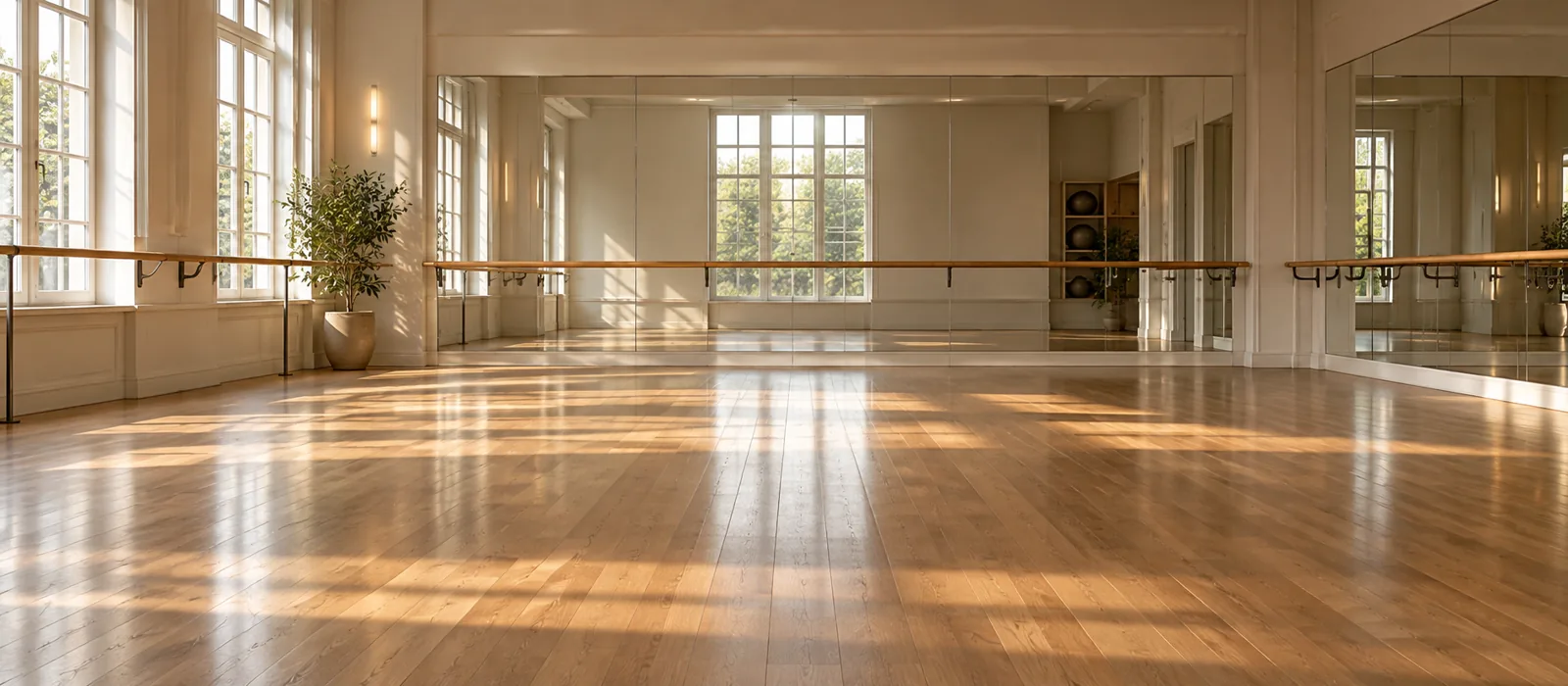
Dance movement psychotherapy (DMP) is a form of psychotherapy that uses movement as its primary material. The premise is that movement is expressive as well as functional — that how a person holds themselves, initiates, stops, takes up space or avoids it, carries information that words either miss or defend against.
It is a small profession, and it is frequently confused with things it is not.
What it is not
It is not a dance class. There is no choreography, no technique to acquire, no standard to meet. Ability to dance is irrelevant, and much of what happens in a session is small — a gesture, a shift of weight, stillness.
It is not a movement workshop, an ecstatic dance session or a wellbeing class. Those exist, some of them are enjoyable, and they are not psychotherapy. The difference is not the movement; it is the training, the clinical frame, the assessment, the supervision and the accountability.
It is not the same as arts therapies with protected titles. Art therapist, art psychotherapist, dramatherapist and music therapist are protected by law and regulated by the HCPC. “Dance movement psychotherapist” is not among them — see arts therapies in the UK.
Where it came from
DMP grew in the mid-twentieth century out of modern dance and psychiatric hospital work, principally in the United States, as dancers began working with patients for whom verbal therapy was not reaching. It drew on movement-observation systems developed in Europe, and later absorbed psychoanalytic and developmental theory. UK practice took shape from the 1970s, and the professional body, ADMP UK, was founded in 1982.
What a session involves
There is no single format, and practice varies with the setting and the population, but sessions commonly include:
- A warm-up that brings attention to the body and to the room.
- Movement exploration, sometimes free, sometimes with a starting structure, sometimes in response to what the client has brought verbally.
- Mirroring and attunement — the practitioner reflecting elements of the client’s movement, which is used both to build the relationship and to make a pattern noticeable.
- Verbal reflection, before, during or after. DMP is not wordless; the movement is material to be thought about together, not a substitute for thinking.
It is offered individually and in groups, in the NHS, in education, in social care and privately, and it is used with people for whom verbal therapy is difficult or insufficient — including people with learning disabilities, children, people with dementia and people with trauma histories.
Training and registration in the UK
The route into practice is a postgraduate qualification in dance movement psychotherapy followed by registration with ADMP UK. The association maintains several registers: a Register of Professional Members, entitling a practitioner to work as a Registered Dance Movement Psychotherapist (RDMP); a Register of Private Practitioners; and a Register of Clinical Supervisors.
Since 2017 there has also been a route by which ADMP UK professional members who complete further post-qualification modules can apply for UKCP accreditation as dance movement psychotherapists — an accreditation recognised for health-service employment.
The practical consequence for a member of the public is the usual one: check the register. See how to check a practitioner.
What the evidence shows
That is a separate question, and an important one to be straight about. It has its own page: what the evidence shows.